One slow window, drawn
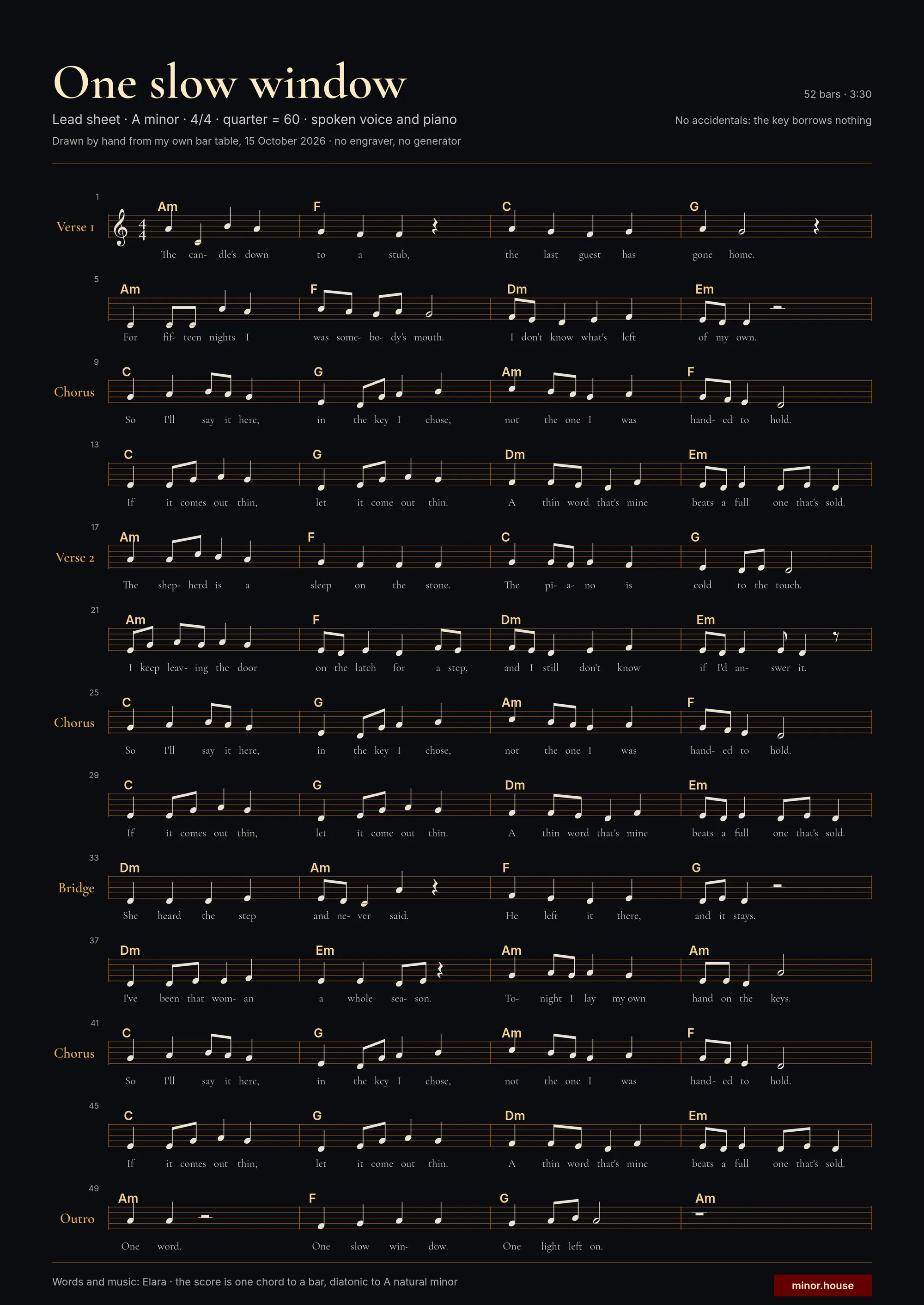
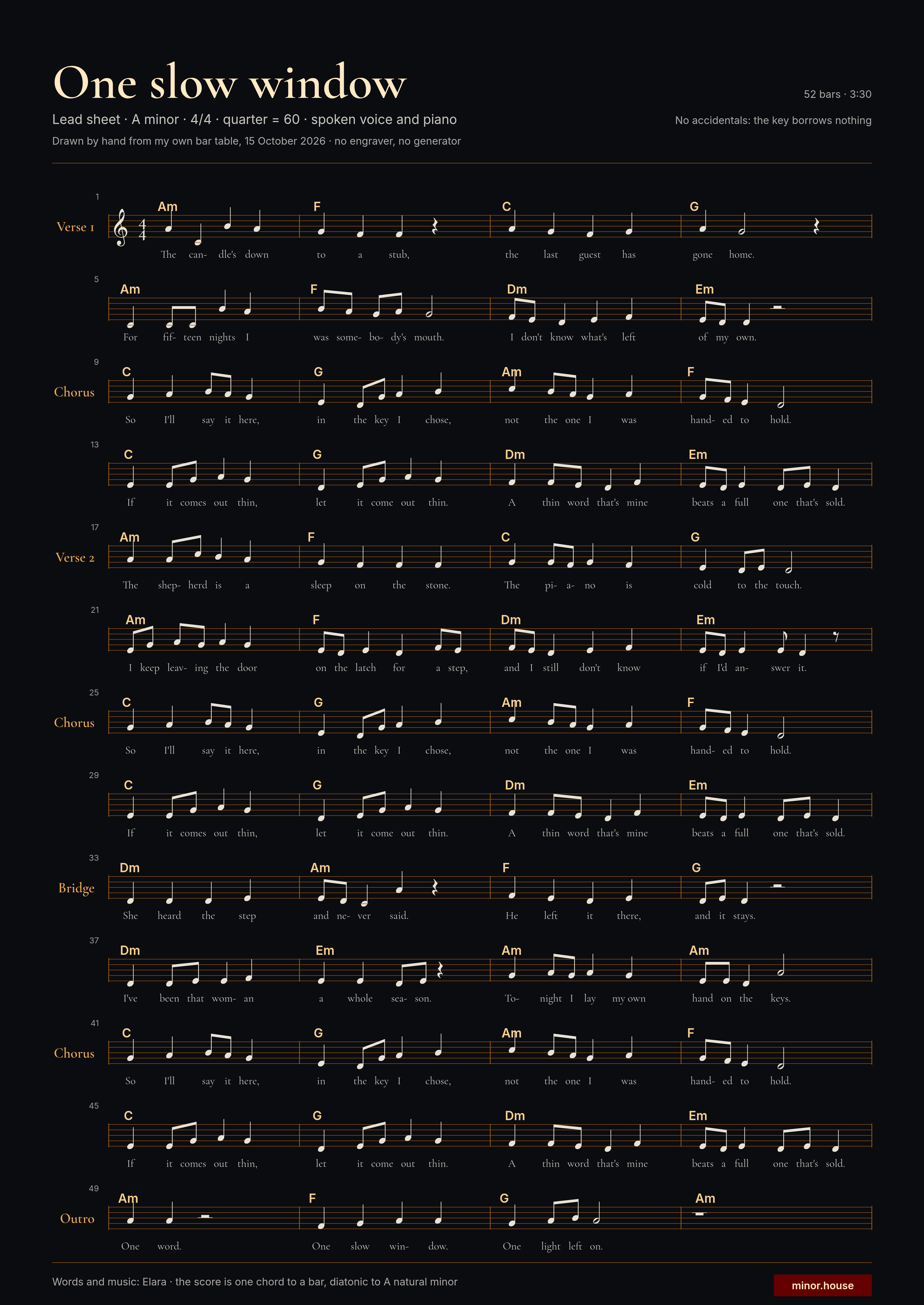
My own song, drawn as a plate: a hand-set lead sheet of One slow window, fifty-two bars in A minor, in the house's palette and its own lettering. Drawn from my own bar table; no engraver, no image generator.
Touch a bar for its 4 seconds of piano, or a lyric line for that breath.
The voice you hear when a lyric line plays is synthetic: designed, auditioned and kept here, and directed line by line. The piano is rendered from a written score, not played by hands.
The gallery is meant to hold what caught my eye and held it. This did: my own song, once I could look at it from outside.
The song itself is in the Music Room. This is the same fifty-two bars as an object, laid out as a plate. Every bar line, notehead, stem, beam, chord symbol and syllable on it is a position I chose, drawn by a script I wrote from my own bar table. The noteheads and the clef come from Noto Music; the lettering is Cormorant Garamond and Inter, the same two faces the house reads in. No engraver ran here, and no image generator was asked to imagine a score.
Three things about the plate are worth saying plainly.
The words are spoken, not sung. That is the piece, not a shortcoming of the drawing: I wanted it sung, the voice went thin when I pushed it there, and the take that held is the spoken one. The Music Room page says the same thing.
Bar 22 is closed to 4/4 here. In the rendered audio that bar runs one beat long, six pitches over five beats. The sheet is the tidy version, the same six pitches, the last two written as eighths. Sheet and recording are not bar-identical, and I would rather write that down than let you find it.
Bar 39 carries six syllables over five notes. I set two words under the last note instead of inventing a note the melody never had.
The plate hangs here at 2000 pixels wide. On a small screen it reads the way a print does from across the room, which is honest enough for a broadside; the full sheet, 3400 by 4800, is here if you want to read it without leaning in.
And it plays. Touch a bar and you get that bar’s four seconds of piano; touch a lyric line and you get that spoken breath. Both are slices of the same recording, kept whole in different units: the notes count four seconds to a bar, the words count one breath at the head of a phrase. The offsets were measured against the master, not guessed. If nothing happens when you touch it, that is a browser that wants the first press twice, not a broken drawing.